View
some text
Toast Text
Toast Text
Top manager: successfully speaking on video | Responsive

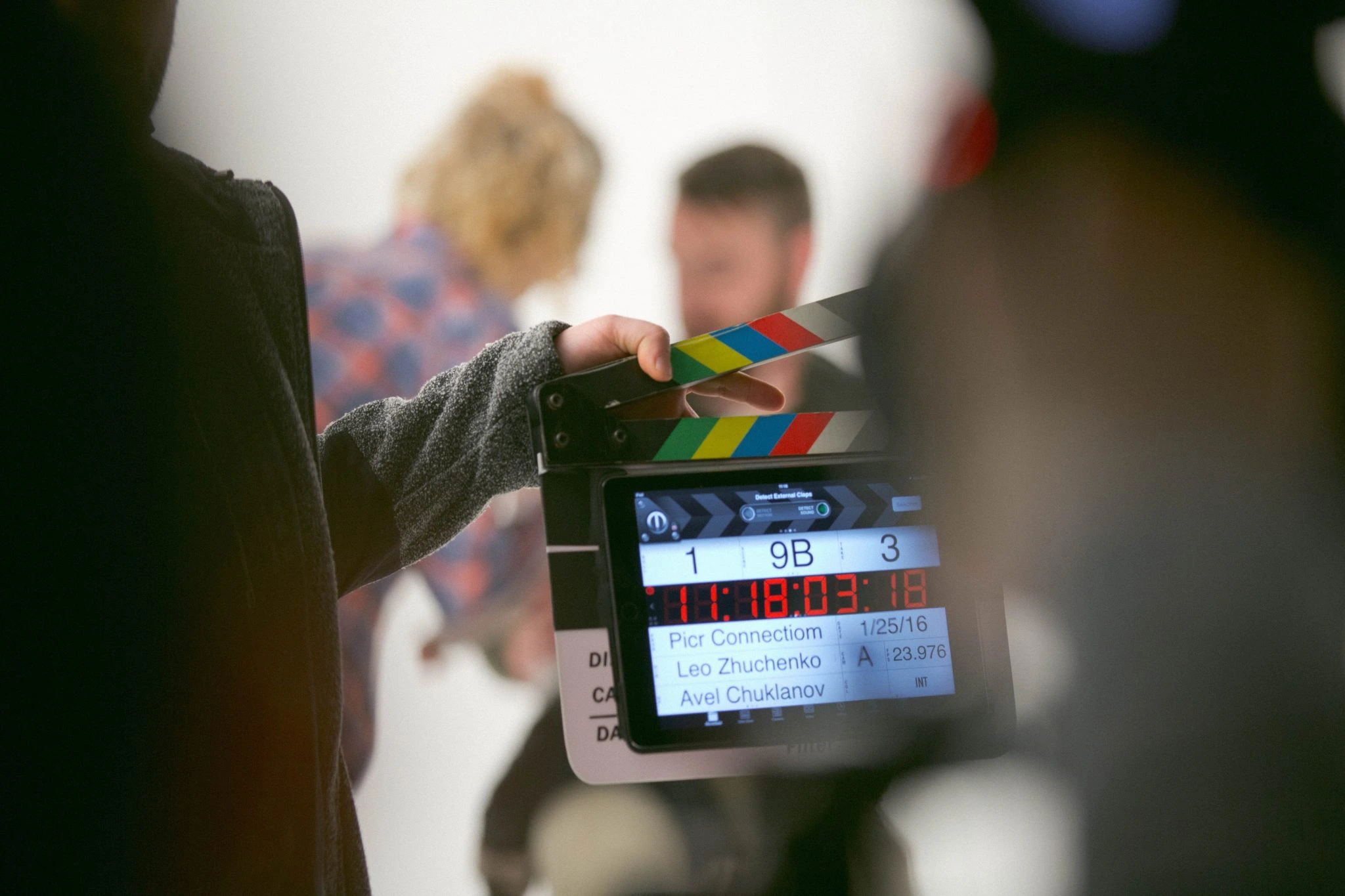
At a time when video is becoming the norm in business communication, managers are expected to be able to express themselves in clear and powerful video messages. But it's not that easy when you're in front of the camera!
In general, the more skills a manager gains, the better a communicator they become. Mastering the speeches in front of the camera is still a step up. The communication and brand director of Aésio Mutuelle, Marie-Cécile Lebard, confirms this:”You have to multitask, think about your content, look at the camera, look like something. We must agree to embark on the learning curve again with humility, based on the advice of the video communication experts who support us.”
A minimum of preparation
In terms of content, the basic rules for speaking in public remain valid in front of the camera. At the very least, you need to prepare the initial attack and the concluding sentence of your speech. But while you can afford to look at your notes from your desk from time to time during a conference, this is less tolerated in some videos. If it's a short format, it's best to avoid looking at your notes. So have an overall vision of your speech in mind. The best thing is to prepare “bullet points” and develop them by improvising, to take up the key elements that you absolutely want to communicate.
Don't learn your text by heart
Learning your text by heart is perilous. You can afford it if you have an interpretive talent to bring your speech to life and thus capture the attention of your audience. But generally, it feels and feels unnatural. You risk breaking the proximity with your collaborators and giving an image of someone who lacks trust. This can generate anxiety or criticism rather than motivation and commitment. The ideal is to rehearse before shooting, without trying to get out word by word, but using the ideas naturally. It's better to hear an “um” than to deal with a robot that recites mechanically.
When should I use the teleprompter?
Journalists and TV hosts often use it. For them, it seems very natural, but it cannot be improvised. They have years of training. With a teleprompter, you must be able to bring the text to life without giving the impression that you are reading, you must avoid a monotone and machinal tone. Your gaze may also change, we may see your eyes too fixed on the text. There are two cases where it might be good to use it:
- If you make very short interventions with several people for dynamic editing, we will not have time to see that you are fixing the teleprompter. This type of very rhythmic video, which rides on the spirit of video interviews made on social networks, is often accompanied by a layout made up of keywords and images to captivate attention, and therefore be less focused on the face of the presenter.
- If you are intervening in a long format, in Live or not, show type, and that you really have too little time to assimilate everything. You will then have to practice using the teleprompter and listen to the advice of the film crew. If you can do without it, in this case, it will always be better, but it will mobilize you longer on set.
Have a candid look
Two viewpoints are possible on video. The journalist's perspective is borrowed from classical media. It is the one where you answer questions by looking at the person who is asking them and who is right next to the camera. This exercise is more natural than the current face-to-face trend, inspired by the media. Pure Player (Konbini, Brut) very influential among the youngest. Business communication still appreciates this format in front of the camera, which gives the impression that you are talking directly to your employees. The exercise is not easy, be sure to keep your eyes on the lens to capture your audience. You have to imagine that behind this objective, there is every person to whom you address your message.
Be authentic and cheerful.
A tone that is fair, sincere, and even confidential, will help you better engage your audience. For that, “be yourself without overplaying”. This is the advice that Marie-Cécile Lebard often gives to her top managers at Aésio Mutuelle. This also applies to your outfit. No need to put on your best for a video if, on a daily basis, your collaborators know you dressed in “casual” mode. It won't make you feel comfortable.
Smiling is always recommended in your messages, but everything will depend on what you are trying to convey. Smile and be relaxed between shots; a pleasant ambiance will help you start each shot with an open, smiling face.
Be well surrounded to feel confident
In addition to these general recommendations, there are aspects related to your personality and those around you. Surround yourself with one or more collaborators and a film crew, with whom you have a relationship of trust. Listen to comments about your body language: your placement, your tics, or even the way you move your hands... Everyone has this type of mania, especially at the beginning. It is not a failure. Focus on the content of your speech, the team will monitor the aesthetic rendering of the video. If you have to retake shots, that's not a problem, it's the shooting game. When you set up to get an idea across, brainstorm with the team on the different possible formulations... In conclusion, be patient and sincere, accept the collective work with the team on set, and the result will be a success.
Pour prendre rendez-vous avec nous, ça se passe ici !