View
some text
Toast Text
Toast Text
Internal communication: why use video? | Responsive


In recent years, digital solutions have multiplied, as has the need to communicate very quickly. The diversity of media generated, and by extension, of content, therefore creates a need to emerge, even internally.
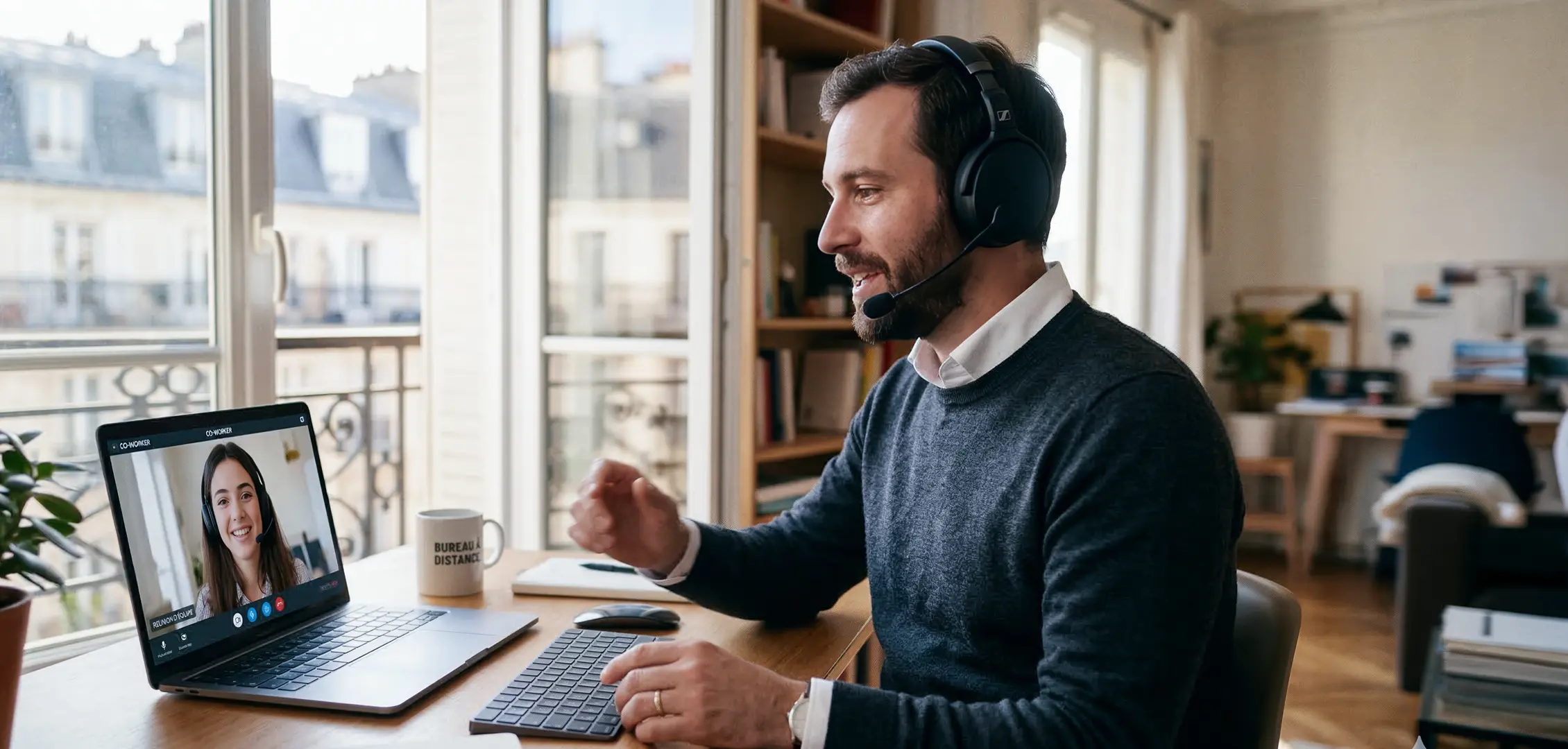
More recently, the reorganization of activity, accelerated by the Covid-19 crisis, is leading more and more employees to work remotely (travel, teleworking, etc.). These changes raise questions: how to communicate well at a distance, preserve the spirit of enterprise; and to define the place of video in this new configuration.
More generally, video is a central tool for business communication. But how and in what cases should it be used? It was the question from STAYIN'LIVE: “What place should video be given to communicate within companies, with the reorganization of work that is currently taking place? , a debate moderated by Vincent Stilinovic, associate director of the Reactive Production agency.
Video to go beyond communication Top Down and recreate proximity
It has been a fundamental trend for several years now, the company needs to give voice to managers and to the teams to value the role of each person. With this objective, the video seems to be perfectly suited to arouse emotion and highlight the human dimension of company policy.
Claire Meslif, KRYS GROUP Network Communication Manager, confirms that the cooperative has been using video for managerial statements for several years now. A message is immediately better perceived when it is embodied. The tone of voice, the diction... immediately bring human warmth. An asset that is very difficult to compensate in writing. In addition, when a person speaks in front of the camera, it is immediately much more engaging for the viewer, and this is true in the viewing rates.
Videos such as “best practices”, “tutorials” and “coaching” are multiplying, based on their success with employees, who appreciate participating as well as recognizing their colleagues on video. Giving a voice to peers, especially on video, is a good way to give credibility to the message and convince. It's the law of proximity for journalism:” It's at home so I'm interested! ”. Beyond the speech itself, this kind of videos make it possible to capture an atmosphere (through illustration plans) in a much more effective way than with photos.
Finally, the “Tutorial” support is resolutely in line with the times. Everyone is following it on YouTube. Short format, possible to enrich with infographics, the video tutorial is ideal to replace a long explanatory text. The tutorial must capture attention immediately so as not to lose our “zapper brains” who need to be caught up in strong images.
A more novel trend, forced by the health crisis, is the emergence of videos “speaking out of managers ” in a more intimate setting. Indeed, due to lockdown, some had to speak from their living room, far from the usual codes of this kind of exercise.
According to the participants of STAYIN'LIVE, this should not be seen as the advent of a new trend, but rather as the response to an exceptional situation.
However, they agreed that the crisis prompted questions about “how to speak out on video”. Without training, not everyone can express themselves on video. The Covid crisis has seen the emergence of a need to communicate, and at the same time, the multiplication of videos of very diverse quality. So video yes, but provided you are well accompanied!
Video for a new organizational dimension accelerated by the crisis sanitary
How do you maintain an entrepreneurial spirit when everyone is at a distance? Video is clearly a part of the solution. However, it is still essential to keep the budgetary dimension in mind. Video can be expensive, and internal communication won't always have the resources to adopt it. When the budget is tight, it is better to favor the text.
Caroline D'Aulan Laval, director of external relations at Edmond de Rothschild, also emphasized the concept of urgency. In the crisis encountered, leaders found themselves in an unprecedented situation where it was difficult to know what message to carry. In video, it takes time to properly define your message, which does not always make it the most appropriate medium for hot news, and messages with a short lifespan. In this case, email seems much more appropriate. The video should be reserved for more global messages, which may last over time.
Video should be used on an ad hoc basis, for substantive strategic messages. In the crisis we are going through, the lifespan of messages being difficult to assess, it is not always easy to choose the right medium.
Claire Meslif emphasized that Covid had increased the power of the group's intranet, presenting it as the last link with the company. The space then mutated, going beyond its strictly professional singing to become a space for conviviality. Numerous invitations have been issued to collaborators, such as posting the photo of the view of their hHome Office, their slippers or their pet... It is interesting to note that the loss of conviviality is greater between services than within an own department. Since the days of teleworking are postponed, some people can go months without meeting each other! Hence the idea of communicating about the activities of others.
The video remains a major informative and fun tool. As new generations are taking ownership of it with more and more ease, it clearly has its place in the organization of the communication department of tomorrow, with new skills to be developed. It will be omnipresent on intranets and internal social networks.
Pour prendre rendez-vous avec nous, ça se passe ici !